#
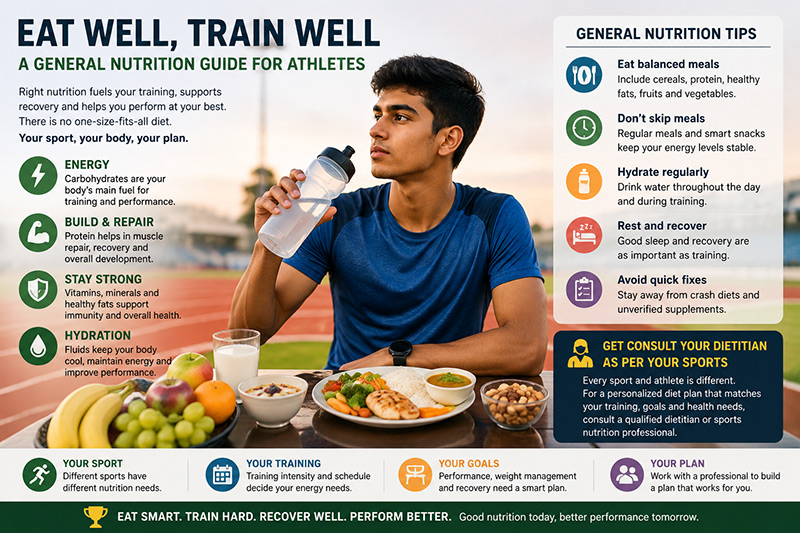
Good nutrition plays an important role in an athlete’s energy, recovery, concentration and overall performance. However, **there is no single diet plan that is suitable for every athlete**.
A shooter, runner, wrestler, swimmer, footballer and weightlifter may all have very different nutritional requirements. Age, body weight, training intensity, competition schedule, climate and individual health also affect what an athlete should eat.
## Keep Everyday Nutrition Balanced
Athletes should generally focus on a balanced variety of foods that provide:
* Carbohydrates for energy
* Protein for recovery and muscle maintenance
* Fruits and vegetables for vitamins and minerals
* Healthy fats as part of a balanced diet
* Adequate fluids throughout the day
Regular meals and sensible snacks can help athletes maintain energy during training and recovery.
## Before Training or Competition
Food before training should provide enough energy without causing discomfort.
The timing, quantity and type of food may vary considerably depending on the sport and duration of activity. Athletes should preferably use foods they already tolerate well rather than experimenting immediately before an important competition.
## Recovery After Training
After training, the body needs nutrition and fluids to support recovery.
A balanced meal containing appropriate sources of carbohydrates, protein and other nutrients may help replenish energy and support muscle recovery.
The exact quantity required depends on the athlete, sport and training load.
## Hydration Is Essential
Athletes should maintain good hydration throughout the day and during training.
Fluid requirements can change according to:
* Weather and temperature
* Training duration
* Exercise intensity
* Individual sweating rate
* Type of sport
Athletes involved in long-duration or high-intensity activity may have different fluid and electrolyte requirements than athletes participating in shorter events.
## Choose Food Before Supplements
A balanced diet should normally form the foundation of sports nutrition.
Athletes should be cautious about supplements, powders or products that promise rapid improvement in strength, weight loss or sporting performance.
Competitive athletes should also remember that some supplements may contain undeclared or prohibited substances.
## Young Athletes Need Extra Care
Children and teenagers are not only training—they are also growing.
Their food intake should therefore support:
* Normal growth and development
* Training energy
* Recovery
* Bone health
* Concentration and education
* Overall wellbeing
Young athletes should avoid extreme dieting, unnecessary weight reduction or restrictive food plans without professional guidance.
## Every Sport Has Different Needs
Nutrition should be matched to the demands of the sport.
For example:
**Endurance sports** may place greater emphasis on sustained energy and hydration.
**Strength and power sports** may have different recovery and protein requirements.
**Weight-category sports** require particularly careful management of body weight.
**Precision sports such as shooting and archery** may require attention to stable energy levels, hydration and concentration without feeling excessively full during competition.
The correct approach will also differ between training days, competition days and recovery periods.
## Consult a Qualified Dietitian
Khidari recommends using general nutrition information only as a starting point.
For a personalised diet plan, athletes should **consult a qualified dietitian or sports nutrition professional according to their sport, age, training programme, competition schedule and individual requirements**.
A professional can help plan appropriate:
* Daily meals
* Training-day nutrition
* Competition-day nutrition
* Hydration
* Recovery meals
* Weight management
* Vegetarian or other dietary requirements
* Supplement use, where appropriate
## Khidari Takeaway
**There is no universal athlete diet.**
Eat a balanced variety of foods, stay hydrated and develop healthy eating habits—but for performance-specific nutrition, **get advice from a qualified dietitian based on your particular sport and training needs**.